


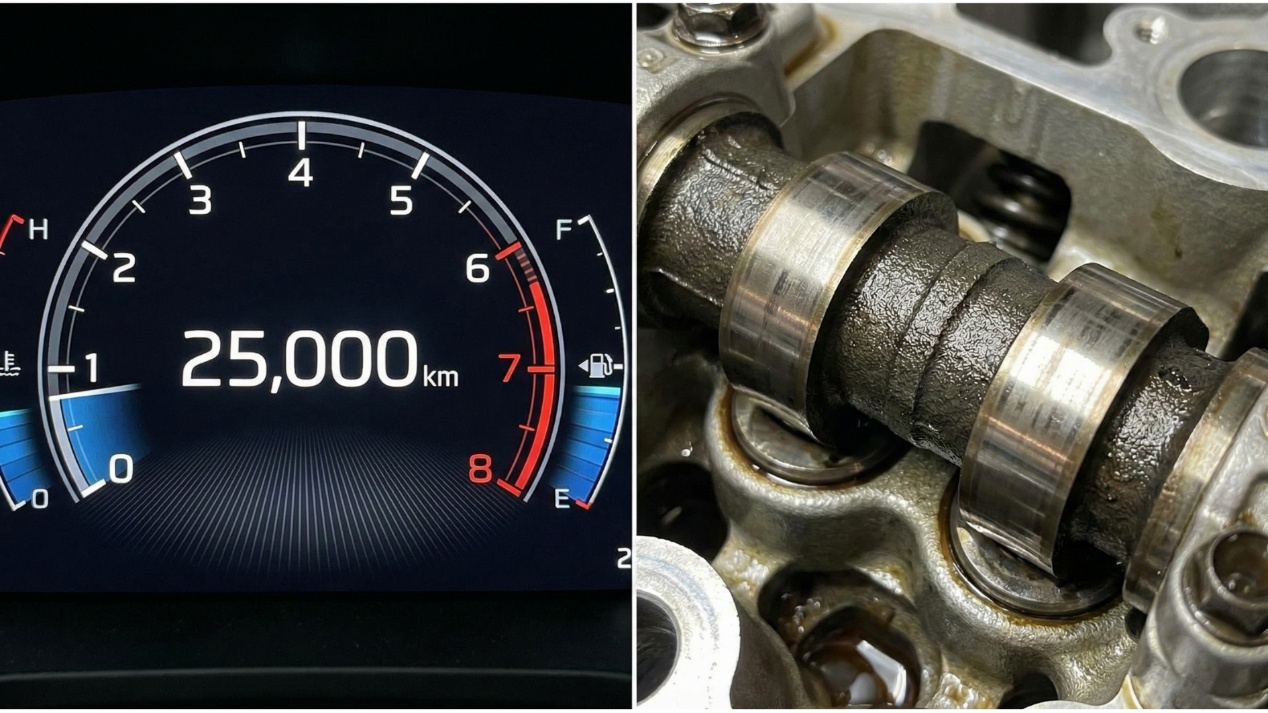
When it comes to changing engine oil, most drivers instinctively “check the mileage.” Whether it’s the manufacturer-recommended 5,000 or 10,000 kilometers, this number has become the golden standard for oil change intervals. However, this standard is actually based on an “average under ideal conditions.” The real-world driving environment and your personal habits are the true deciding factors for oil life and engine health. In many cases, strictly waiting for the odometer to hit a certain number puts your engine at significant risk.
To help you judge better, we have summarized the most overlooked scenarios into four “Invisible Killers.” See if your driving habits are on the list.
Oil Killer #1: Daily Short Trips
Do you drive to work every day, but the commute takes less than 10 or 15 minutes? This seemingly “gentle” usage is actually a major test for your oil.
The Science: Before an engine reaches its normal operating temperature (approx. 100°C), water vapor and unburned pollutants produced during combustion cannot effectively evaporate or be expelled. Instead, these impurities remain in the oil, diluting it and reducing its viscosity. Over time, this leads to the formation of harmful sludge, significantly weakening the oil’s ability to lubricate and protect.

[Invisible Killer] Stop-and-go traffic or long periods of idling during your daily commute may add mileage slowly, but the engine is under a heavy thermal load, accelerating oil oxidation.
Oil Killer #2: Extended Idling in the City
For urban drivers, traffic congestion is a way of life. Whether you are “creeping” through downtown traffic or idling by the curb waiting for a coffee, these fall under the category of extended idling. In these scenarios, the engine continues to run even though the mileage barely moves.
During idling, the engine operates at low efficiency with lower oil pressure. Due to poor airflow, the cooling system must work harder, often creating localized hotspots. This subjects the oil to continuous thermal stress and shear forces, accelerating oxidation. In this case, “engine hours” are a far more accurate reference than the “mileage” on the clock.
Oil Killer #3: Extreme and Aggressive Driving (Severe Conditions)

[Extreme Challenge] Do you love mountain passes or high-speed cruising? High temperatures and high RPMs generate massive shear forces. If oil quality isn’t high enough, the oil film can break, leading to a total loss of protection.
If you are a performance enthusiast who frequently tackles mountain roads, enjoys high-speed driving, or if your vehicle often carries heavy loads or tows trailers, your oil is being pushed to its limits.
Under aggressive driving, the engine remains in an extreme state of high RPM, high temperature, and high pressure. This subjects the oil to intense thermal oxidation and mechanical shear, which can literally “snap” the polymer chains used to maintain viscosity. This leads to a rapid drop in oil viscosity and a thinning of the oil film, drastically increasing the risk of wear on internal engine parts.
Oil Killer #4: The “Long Vacation” — Prolonged Storage
Leaving a car stationary for a long time can also cause oil to deteriorate. If your car has been parked for more than six months due to travel or other reasons, the oil quality is quietly declining even if the mileage remains at zero.
Oil continues to oxidize simply by being in contact with air. Furthermore, various additives (such as detergents and dispersants) may settle over time, losing their effectiveness. If moisture and pollutants from the last drive remain in the oil pan, they will accelerate the acidification of the oil. Therefore, experts recommend that if a vehicle has been stationary for over a year, the oil should be changed regardless of mileage.
DIY Inspection: 3 Simple Ways to Tell if Your Oil is Degraded
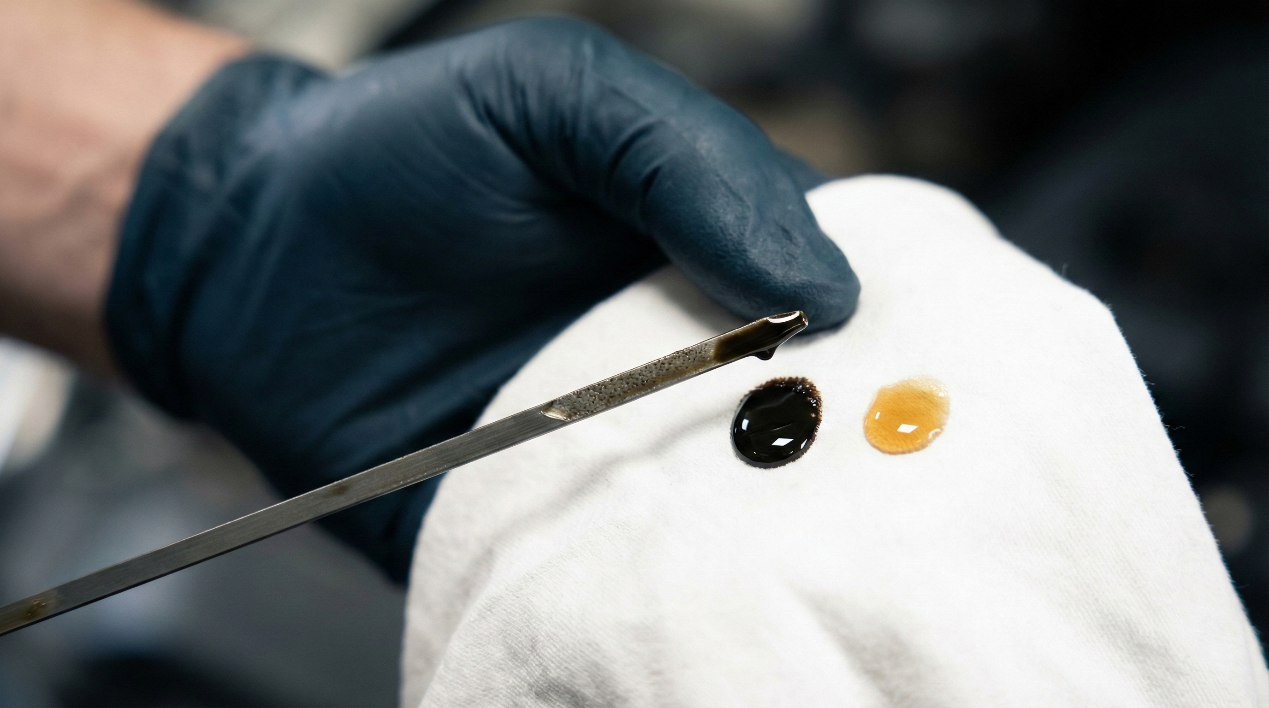
[DIY Health Check] Pull the dipstick to check: The golden-yellow color on the right indicates healthy oil. If it looks like the sample on the left—murky, opaque black, and containing impurities—please change your oil immediately. Do not wait for the mileage.
Beyond identifying high-risk scenarios, your car often gives you sensory clues about its oil health. Here are three simple ways to check it yourself:
- Color and Transparency: It is normal for oil to turn black as it cleans the engine. However, if the oil on the dipstick is as thick as ink, completely opaque, or contains visible grit/sediment, it is severely degraded.
- Smell: Healthy oil has a mild scent. If you smell a strong odor of gasoline, it indicates serious fuel dilution. If you smell burnt rubber, the oil has likely undergone excessive thermal oxidation.
- Engine Sound: When lubrication efficiency drops, you may notice the engine becoming louder or the “tone” becoming rougher. You might even feel slight vibrations at idle. These are warning signs of insufficient protection.
Conclusion: Rethinking Your Oil Change Interval
Mileage is an important reference, but it is certainly not the only indicator. We must understand that oil degradation is the combined result of time, temperature, and contaminants—mileage is merely a simplified way to track these factors. A driver who truly cares for their vehicle should consider “operating hours, environmental conditions, and driving habits” to create a personalized maintenance strategy.
Which category do your driving habits fall into? It’s time to re-evaluate your oil change interval and give your engine the timely protection it deserves.
[The Ultimate Shield for Your Car] Against these invisible killers, you need tougher protection. The JET-SUPER Fully Synthetic Oil Series is specifically engineered to resist high-temperature oxidation and shear forces, ensuring your engine remains fearless against any challenge.